


The mango thrives in both the subtropics and the tropics. In the subtropics, the cold months ensure excellent floral induction but late frosts are a major risk as tender parts of the tree are damaged by frost. In the tropics, the mango grows anywhere up to 1200 m elevation, but for fruit production a prominent dry season lasting more than 3 months is necessary.
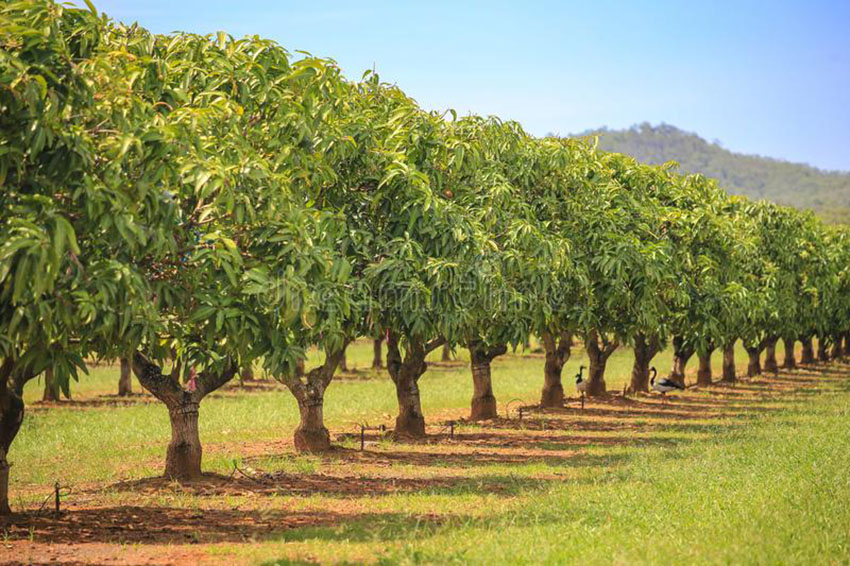 A flowering flush is produced during the dry season but contrary to the sub-tropic flowering is erratic and a yield-limiting factor. At elevations above 600 m in the tropics, the climate becomes too cool for the commercial cultivars, the optimum temperature being about 24-27 0C. The trees are drought tolerant but do not seem to suffer from occasional flooding. It is frequently found in coastal areas. Trees shade out grasses because of their thick crowns.
Flowering starts at the beginning of the rainy season and fruits ripen at the end of the rainy season. Bisexual and male flowers appear on the same cluster, in proportions that vary from 1:4 to 2:1. Some trees do not flower for periods of 10-20 years, sometimes even longer, individual trees often flower irregularly. Evidence from various countries shows that some cultivars develop fruit without fertilization but that others need cross-pollination, the determining factors are not yet well understood. The pollination and fruit setting is reduced by rain and high humidity at blossoming. Pollinators are nectarivorous bats and insects such as flies, ants and possibly thrips, but bees are the most effective.
Hermaphrodite flowers are predominantly outcrossing and exhibit protogynous dychogamy but trees are generally self-compatible and self-fertilization by pollen from the same flower is possible. Usually only small proportions of the flowers develop into fruit. It has been shown that 65-85% of hermaphrodite flowers remain unpollinated and that only 0.1-0.25% of them reach the harvesting stage, with fruit drop occurring at all stages. The time of development after fertilization to maturity of fruit is 2-5 months depending on the cultivar and temperature. Fruiting is often biennial, some cultivars, in addition to the main fruiting seasons, set a few fruits throughout the year.
Soil type: Mango trees thrive in well-drained soils with pH ranging from 5.5 to 7.5 and are fairly tolerant of alkalinity. For good growth, they need a deep soil to accommodate the extensive root system.