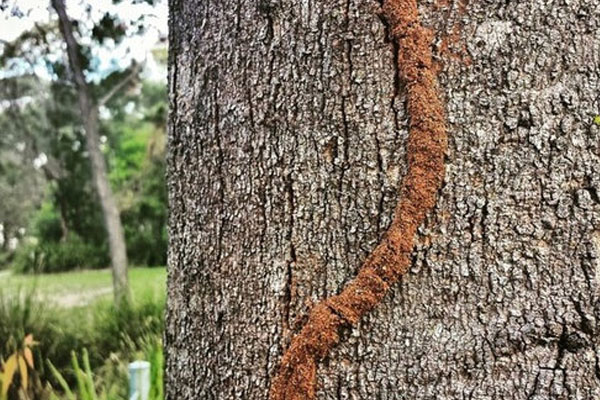
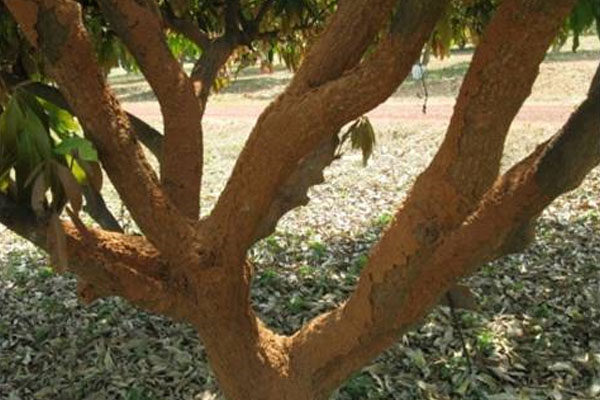
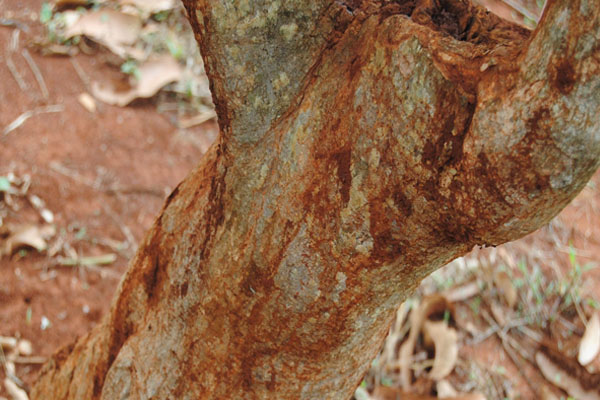
Presence of brown muddy layers as earthen galleries on tree trunk is seen.
Fresh muddy layers when examined by removal of mud would have live termites that are white and active. In termites the head is highly sclerotized and mandibles of soldier termites are well developed.
Adding organic material to the soil: Adding compost or well-rotted manure to the soil and growing green manures helps to increase the organic matter in the soil. Where possible, green manure crops can be ploughed into the soil. Moisture plus organic matter attract the termites and prevent them from attacking the target crop. Castor press cake can be incorporated into the soil in order to control the termite infestation. It is suggested to add it into the opened furrow before sowing the crop.
Cultivating on ridges: Ridges are usually made along contours and the soil is finally shaped into a ridge form. In these operations, termite colonies are destroyed or exposed to predators such as birds.
Healthy plants for transplanting: Plants which are suffering from disease or lack of water are generally more susceptible to termites than healthy plants. It is therefore important that plants are kept healthy and watered.
Crop rotation: can play an important role in reducing termite attack.
Irrigation: Irrigation is also used to minimize the effect of the termites.
Avoiding plants from termite attack: In general indigenous crops are more resistant to termites than exotic crops. Annual crops are attacked towards harvest time while perennial crops are attacked most destructively during dry seasons or in early stages of growth. It may be advisable to establish small plantations in the field prior to larger scale plantations in order to discover if the crop is attacked to termites in local conditions.
Biological control measures against termites are generally difficult because of their social nature and secure enclosed environments that protect them against most antagonists. Entomo-pathogenic fungi, nematodes and bacteria are some of the biological control methods of termite.
- Fungi & Nematodes: Preparations based on insect-attacking nematodes and the fungi Beauveria bassiana and two species of Metarhizium , however, are effective, especially when introduced into mounds. Fungi spores can act as repellents. A fungus Metarizium aniospliae (Bio Blast) is another biological termiticide. Nematodes caused high mortality of Reticulitermes flavipes (Kollar) termites in laboratory tests.
- Encouraging predators: Termites have many predators because they provide a source of protein. Insects that eat termites include spiders, beetles, flies, wasps and especially ants. Other predators including frogs, reptiles, birds and mammals such as bats and monkeys. Encouraging this kind of wildlife will help to reduce the number of termites.
Remove the mud galleries on trunk and swab or spray the trunk with Malathion (1.5 ml/l).
After two month, drench the soil at the base of the tree with chlorpyriphos 1.5 ml/l.